
Heavy, Painful Periods? Understanding Adenomyosis
Heavy, Painful Periods? It Could Be Adenomyosis
Do you experience heavy menstrual bleeding, severe cramps, or a constant feeling of pelvic heaviness? Have your periods become progressively more painful over the years?
These symptoms may be caused by Adenomyosis, a common condition affecting women in their reproductive years (particularly 30s–40s). At Santasa Women's Hospital, our experienced gynaecologists provide accurate 3D ultrasound diagnosis, personalized medical therapy, Mirena® LNG-IUS, and fertility-preserving care.
Key Takeaway: Non-Cancerous & Manageable
Adenomyosis is a benign condition. It is not cancer and does not increase your risk of uterine cancer. Early medical management can help you achieve long-term pain relief without major surgery.
4 Pillars of Adenomyosis Care
Endometrial Infiltration
Inner uterine lining tissue grows into the thick muscular wall (myometrium).
Cyclic Inflammation
Tissue bleeds inside muscle each month, causing uterine swelling and enlargement.
Fertility Preservation
Advanced medical treatments & Mirena® allow women to preserve reproductive capacity.
Minimally Invasive Surgery
Uterus-preserving adenomyomectomy or laparoscopic hysterectomy for definitive relief.
Symptoms & Underlying Causes
Common Symptoms
Contributing Factors
While the exact trigger varies, key contributing factors include estrogen hormonal influences, childbirth changes, prior uterine surgeries (C-section or myomectomy), increasing age (35–50), and chronic tissue inflammation.
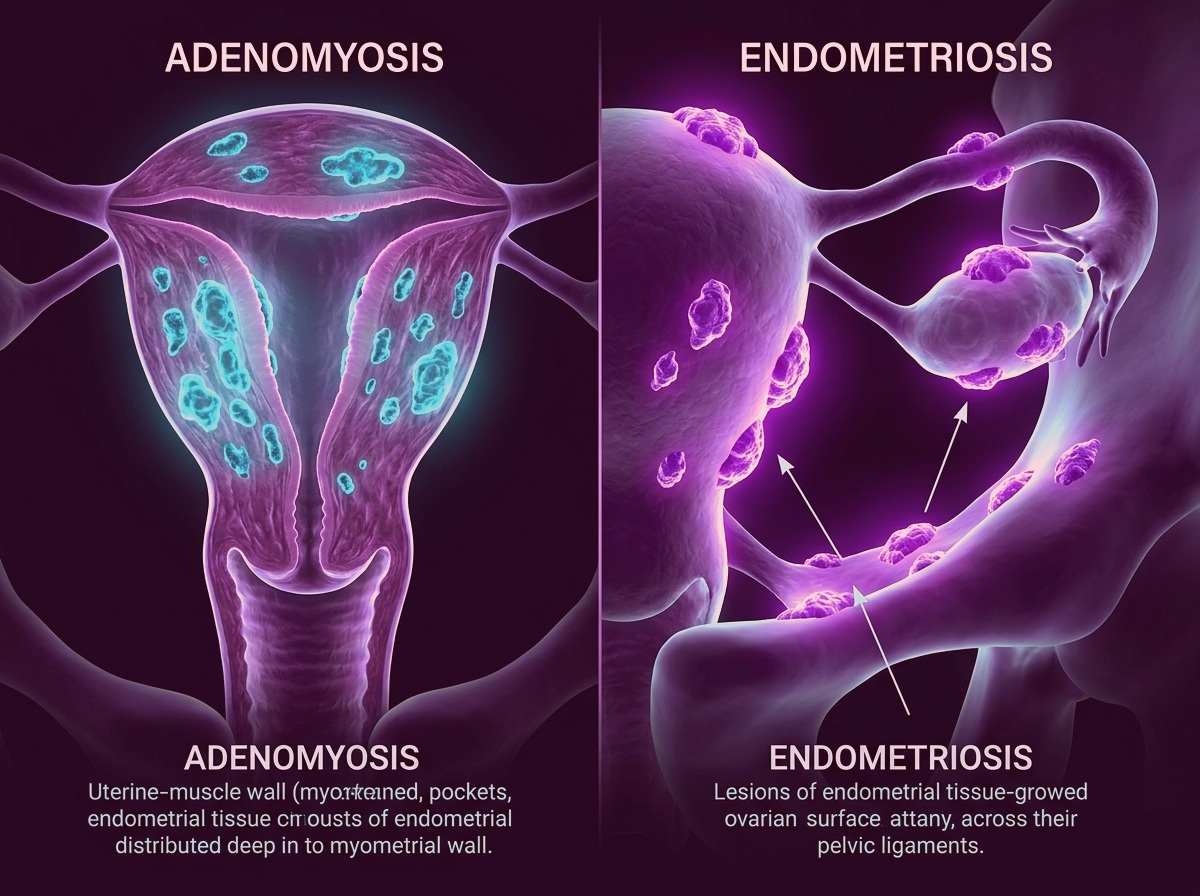
Adenomyosis vs Endometriosis – What's the Difference?
Adenomyosis
Occurs when endometrial tissue grows inside the muscle wall of the uterus (myometrium). Causes an enlarged, boggy uterus, heavy bleeding, and deep pelvic cramps.
Endometriosis
Occurs when tissue similar to the uterine lining grows outside the uterus (on ovaries, fallopian tubes, bladder, or bowel), forming adhesions and implants.
Note: Some women have both conditions simultaneously, which may increase pain and fertility challenges.
Diagnosis & Impact on Fertility / IVF
Diagnostic Protocol: A high-quality transvaginal 3D ultrasound performed by an experienced gynaecologist is usually sufficient. MRI is recommended for complex mapping or when coexisting with large fibroids. Blood tests assess iron levels and anaemia. Unlike endometriosis, diagnostic laparoscopy is rarely required.
Can Adenomyosis Affect Fertility & IVF?
Yes. Adenomyosis may alter embryo implantation, increase uterine inflammation, and slightly increase miscarriage risk. However, many women conceive naturally or with IVF after receiving medical down-regulation therapy (such as GnRH agonists or Mirena®) prior to embryo transfer.
Medical & Surgical Treatment Pathways
Medical Therapies (Non-Surgical)
Surgical Options
Adenomyomectomy (Uterus-Preserving)
Removes focal adenomyosis tissue while keeping the uterus intact for women desiring future pregnancy.
Laparoscopic Hysterectomy (Definitive)
Definitive cure for women with completed families. Performed via keyhole laparoscopy with rapid recovery.
Living with Adenomyosis & Why Choose Santasa
Alongside medical therapy, lifestyle measures such as regular physical activity, maintaining a healthy weight, iron-rich nutrition, anti-inflammatory foods (rich in omega-3s), and pelvic floor physiotherapy support overall wellbeing.
Why Choose Santasa for Adenomyosis Care?
- Experienced gynaecologists specializing in complex menstrual disorders
- Advanced transvaginal 3D ultrasound for accurate non-invasive diagnosis
- Expertise in fertility-preserving medical & surgical care
- Advanced keyhole laparoscopic surgery for rapid recovery
- Comprehensive iron-deficiency anaemia management & intravenous iron support