
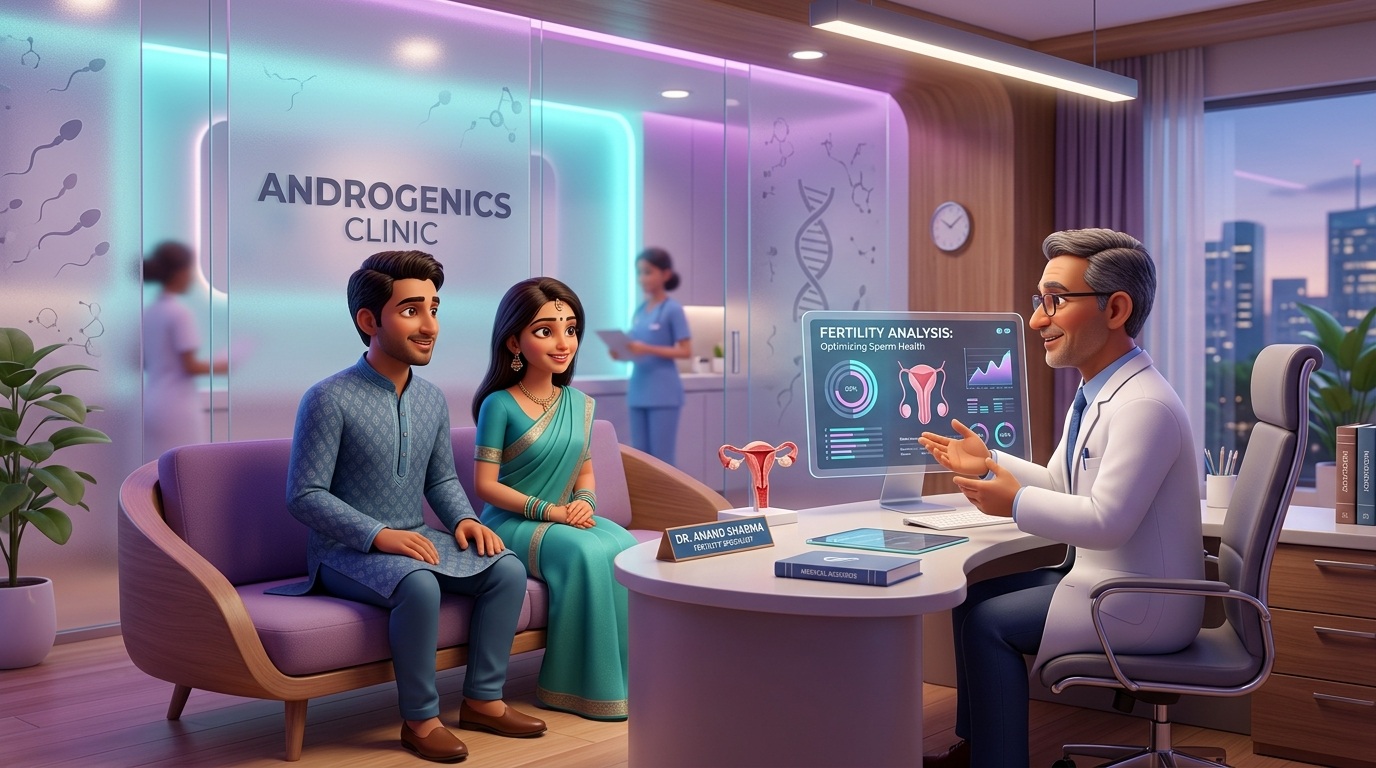
Fertility in Male
Male factor contributes to 40–50% of overall conception challenges. At Santasa, we provide advanced automated computer-assisted semen analysis (CASA), Sperm DNA Fragmentation (DFI) testing, and expert male reproductive care.
Key Essentials of Male Fertility
50% Male Factor Role
Both partners contribute equally to conception; evaluating both early saves precious time.
CASA Automated Analysis
Computer-assisted semen analysis accurately measures count, motility, and morphology under WHO 6th ed.
Sperm DFI Testing
Assesses genetic breakage inside sperm heads, identifying hidden causes of IVF failure.
90-Day Renewal Cycle
Sperm regenerates every 74-90 days, allowing targeted therapy to significantly improve quality.
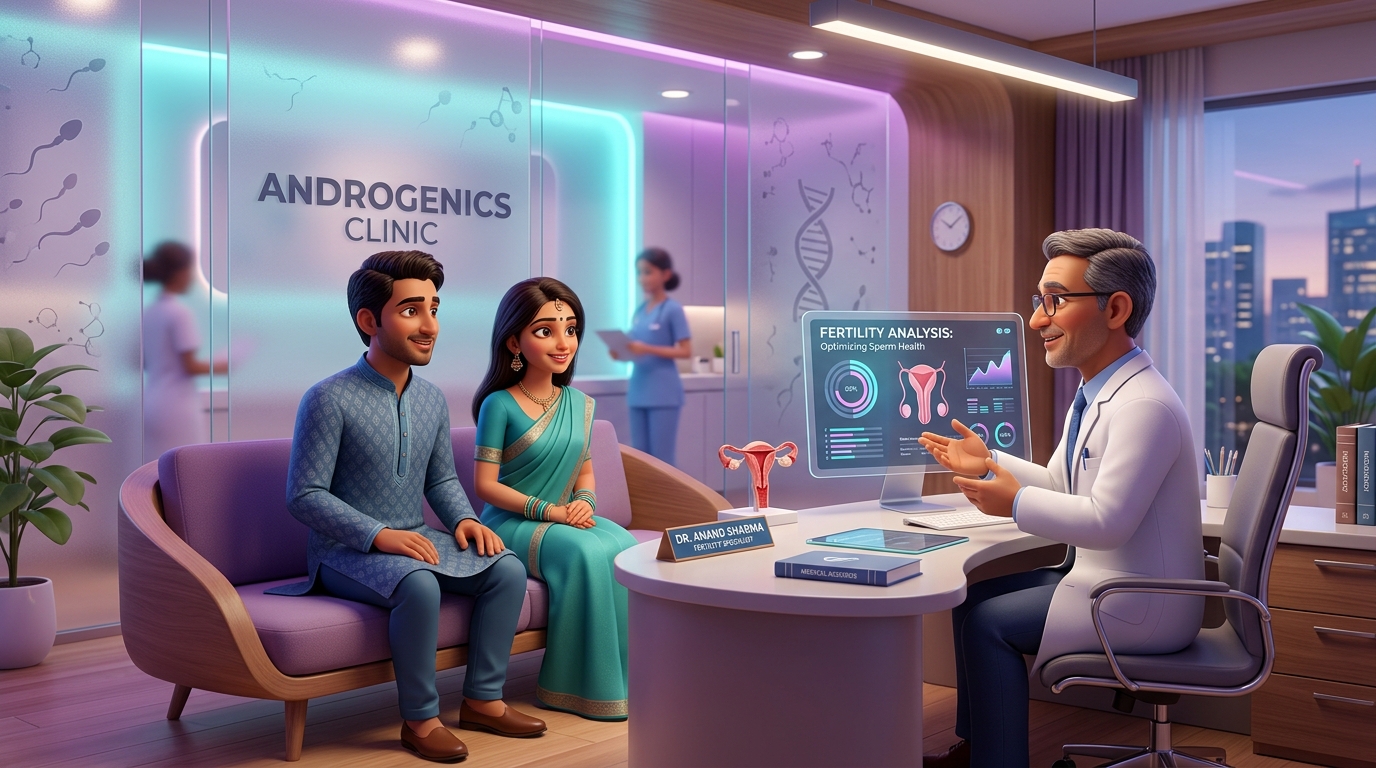
Understanding Male Fertility
For natural conception to occur, male reproductive health requires healthy sperm production, adequate sperm concentration, strong forward motility, normal sperm shape, and undamaged DNA structure.
Sperm Parameter Analyzer
Adjust the sliders below to explore how sperm concentration, motility, and DNA Fragmentation Index (DFI) impact reproductive clinical recommendations:
Advanced Diagnostic Testing
Computer-Assisted Semen Analysis (CASA)
Automated digital microscopy for objective count & motility measurement.
Sperm DFI Biopsy
Flow cytometry to detect DNA strand breaks affecting fertilization.
Hormone Profile
Testosterone, LH, FSH & Prolactin endocrine evaluation.
Scrotal Doppler Ultrasound
High-resolution imaging to detect varicocele or ductal obstruction.
Common Causes of Male Infertility
Swollen veins in the scrotum increase temperature and oxidative stress.
Low testosterone, thyroid, or pituitary hormone disruption.
Previous infections causing scarring or vas deferens obstruction.
Frequent hot baths, laptop heat, smoking, heavy alcohol, and stress.
Y-chromosome microdeletions or Klinefelter syndrome.
How to Improve Sperm Quality
Santasa Andrology Care
At Santasa, our dedicated andrology laboratories are equipped with automated CASA systems, sperm microfluidic selection chips, and PICSI (Physiological ICSI) capabilities managed by senior embryologists.