
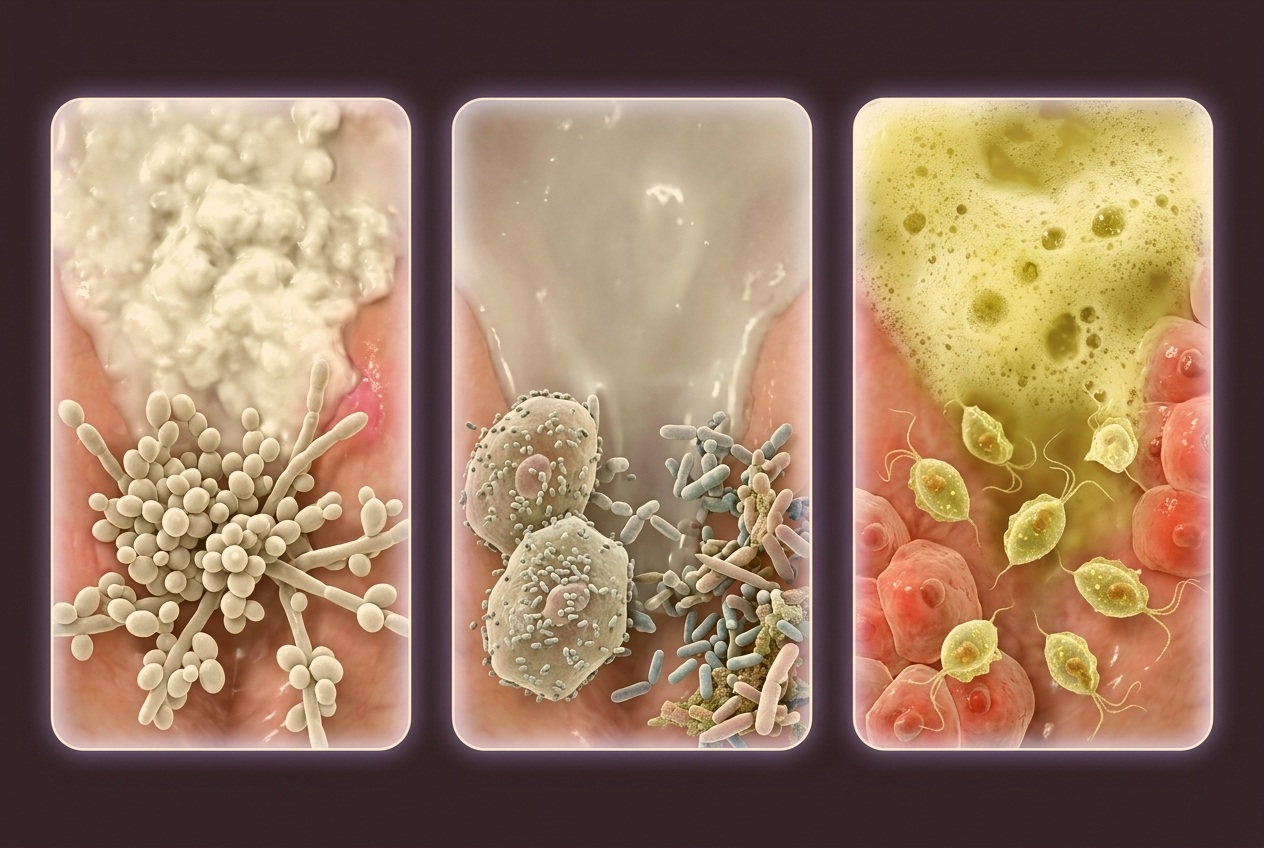
Experiencing unusual discharge? Don't self-medicate — get an accurate diagnosis.
Normal vs Abnormal — What's the Difference?
✅ Normal Vaginal Discharge Is Usually:
Common Causes of Abnormal Vaginal Discharge
Changes in colour, smell, quantity, or consistency may indicate an infection or underlying medical condition. Tap a cause to explore symptoms and risk factors.
Sexually Transmitted Infections (STIs)
Certain STIs can cause abnormal vaginal discharge and may not always produce obvious symptoms. Early diagnosis prevents serious long-term complications.
🚨 Consequences of Untreated STIs:
How We Diagnose the Cause at Santasa
Diagnosis begins with understanding your symptoms and medical history. Accurate diagnosis ensures the right treatment and helps prevent recurrence. Do not self-medicate.
⚠️ Do not use over-the-counter vaginal creams or antibiotics without consulting a doctor — incorrect treatment may worsen the problem, promote antibiotic resistance, or delay diagnosis of a more serious condition.
Treatment — Cause-Specific & Personalised
Treatment at Santasa is tailored to the underlying cause. Each infection requires a different approach — this is why accurate diagnosis is critical before starting any treatment.
🔄 Why Does Vaginal Discharge Keep Coming Back?
Identifying and treating the root cause is essential for long-term relief.
Tips to Prevent Recurrent Vaginal Discharge
You can significantly reduce your risk of recurrent infections with these evidence-based lifestyle and hygiene habits recommended at Santasa.
Keep genital area clean & dry — water or mild fragrance-free cleanser only
Avoid vaginal douching — it disrupts healthy vaginal flora
Wear loose-fitting cotton underwear for breathability
Change out of wet clothing promptly after swimming or exercise
Wipe front to back after using the toilet
Practise safe sex and use condoms to prevent STIs
Complete the full course of prescribed medicines
Ensure your partner is treated when advised by your doctor
Control diabetes and maintain a healthy weight
Eat probiotic-rich foods (curd, yogurt) and stay hydrated
Avoid unnecessary antibiotics that disrupt vaginal flora
Limit harsh intimate hygiene products and scented cleansers
Frequently Asked Questions
Everything you need to know about vaginal discharge and vaginal health — answered by our gynaecologists.
Santasa Women's Hospital — Your Partner in Vaginal & Reproductive Health
Our experienced gynaecologists provide confidential consultations, accurate diagnosis, advanced laboratory support, personalised treatment plans, STI screening, and long-term care for recurrent vaginal infections. We focus on treating the root cause — not just the symptoms.